
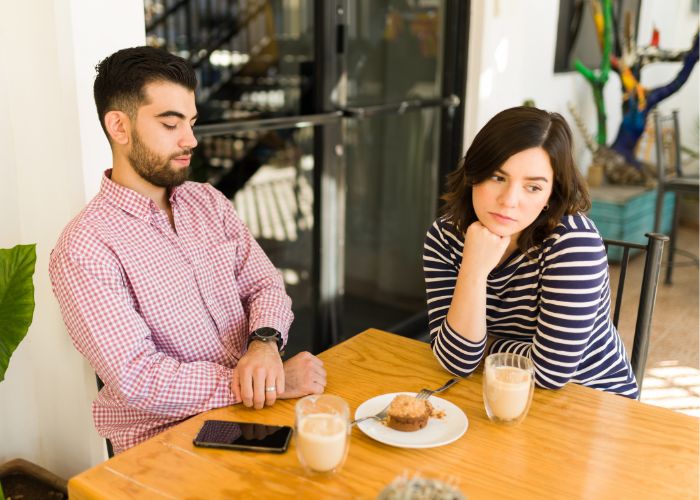



Love can become exhausting when every silence feels like a warning and every delayed reply begins a private argument in your mind. If you are wondering how to stop being clingy in a relationship, the answer is not to become colder or less loving. It is to feel secure enough that affection can breathe without constant proof.
Clingy behavior often grows from fear rather than from too much love. You may worry about being replaced, forgotten, or valued less than yesterday.
The work begins when you notice that fear without immediately asking your partner to make it disappear.
Why Clinginess Often Begins With Fear
People rarely decide to hold too tightly. The pattern usually starts in small moments. A partner replies later than usual, spends time with friends, or seems distracted after a difficult day. An anxious mind can turn ordinary distance into evidence of danger.
A 2026 Ipsos survey found that 82% of people in relationships were satisfied with their partner or spouse.
“I used to think a slow reply meant something had changed,” Hannah said. “I would ask if everything was okay before I had any real reason to worry.”
Recognizing the fear is more useful than judging yourself for having it. You are trying to understand what your mind is protecting before deciding how to respond.
Reading about emotional availability can also help you think about closeness as steady presence rather than constant access.

💡 Related - 10 Reasons for Fear of Commitment and How to Overcome Them
How to Stop Being Clingy in a Relationship Without Losing Warmth
You do not need to become distant to become secure. Healthy closeness can include affection, frequent conversation, and wanting to spend time together. The difficulty begins when closeness becomes the only place where you can feel calm.
Start by delaying the reaction that usually follows uncertainty. If you want to send a third message, wait for a while. If you want to ask whether your partner still loves you, first ask what happened inside you before that question appeared.
That small pause gives emotion time to become information. It helps you separate a real relationship concern from an old fear asking for immediate relief. You can still speak honestly, but you are less likely to make fear responsible for the conversation.
Learn the Difference Between Love and Reassurance
Reassurance is normal in a close relationship. Everyone sometimes needs to hear that they are loved, wanted, or understood. Trouble begins when reassurance stops lasting.
You may hear your partner say everything is fine, feel calm for ten minutes, then search for another sign. In that cycle, the missing answer is not always the real problem. The deeper problem is that no answer feels strong enough to quiet the fear.
One part of learning how to stop being clingy in a relationship is noticing how long reassurance satisfies you. If the same question returns without new evidence, pause before asking it once more.
Write down what you fear and what you truly know. The thought that your partner is losing interest is different from repeated cancelled plans and unexplained distance. That distinction keeps imagination from becoming evidence.
If something truly needs discussion, questions that build connection can help you begin a calmer conversation about emotional needs.
Give Your Partner Room Without Reading It as Rejection
Space can feel frightening when closeness has become proof of safety. A night with friends may feel like exclusion. A quiet afternoon may feel like withdrawal. Yet two people can love each other deeply while still having separate hours, interests, and friendships.
Your partner can love you and want solitude. They can enjoy time with friends without wanting a different relationship. They can be tired without being angry with you.
“I used to count how many evenings he chose something without me,” Claire said. “I became calmer when I stopped treating his independence as a vote against our relationship.”
The same freedom belongs to you. Time apart should not become a waiting room where you watch the clock until your partner returns. Fill it with something that has meaning in your own life.
Learning about maintaining individuality can make that balance easier to see. Love can remain close while each person keeps a private sense of direction.
💁♀ Also read - Relationship Boundaries With Friends That Keep Love and Trust Strong
Build a Life That Still Belongs to You
A relationship becomes heavy when one person is expected to provide nearly all companionship, reassurance, excitement, and emotional comfort. Love matters deeply, but it should not become your entire structure.
Return to interests that existed before the relationship. Call a friend without turning the conversation into a report about your partner. Exercise, read, learn something, work toward a goal, or spend an evening alone without treating solitude as failure.
This is one of the most practical answers to how to stop being clingy in a relationship because independence gives your mind other places to stand. When your identity feels larger, a partner's temporary absence does not make your whole life feel empty.
You can also explore ways to grow together without losing yourself. A healthy bond should make room for two developing people, not ask one person to disappear into the other.
Change the Way You Use Your Phone
Phones can make insecurity easy to feed. You can watch online status, reread old messages, compare response times, and search for meaning in a few digital traces. Each action promises certainty, yet another question often follows.
A Pew Research Center survey on relationships and technology found that 34% of partnered adults had looked through their partner's cellphone without that person's knowledge.
That figure does not mean phone checking is a sign of clinginess in every case. It does show that digital monitoring is common enough to deserve attention. Easy access to information can tempt people to seek certainty in ways that weaken privacy and trust.
Set simple limits for yourself.
1) Do not use online activity as emotional evidence.
2) Do not inspect followers whenever anxiety rises.
3) Do not keep sending messages simply because the first one has not been answered.
If digital habits are making affection feel like surveillance, healthier relationship boundaries may help you think more clearly about what care should and should not require.
Ask Clearly Instead of Testing Their Love
Clinginess sometimes appears indirectly. You may become quiet to see if your partner notices. You may mention another person to provoke jealousy. You may threaten to leave because you want to hear that they will fight for you.
These tests rarely create lasting security. Even when your partner responds exactly as hoped, the relief may depend on another test the next time fear returns.
A better step in knowing how to stop being clingy in a relationship is to ask plainly for what you need. Say that you have felt disconnected and would like time together. Say that a recent change has made you uncertain. Give your partner a real question instead of a hidden exam.
“I used to say I was fine and then punish him for believing me,” Lucy said. “Things changed when I started saying what I needed before resentment had time to grow.”
A love language quiz for couples can also open an easy conversation about the kinds of affection that feel most meaningful to each person.
Let Trust Grow From Patterns, Not Promises
Security cannot be built from one perfect sentence. A partner can promise love tonight, but trust grows from what happens repeatedly over weeks, months, and years.
Watch patterns. Notice if your partner keeps important promises, speaks respectfully during conflict, makes time for you, and returns to difficult conversations. Consistency gives trust something firmer than a moment of reassurance.
If the pattern is caring and reliable, let that evidence matter. Do not allow one unusual day to outweigh months of steady behavior.
If the pattern is unreliable, do not label every concern as clinginess. Learning how to stop being clingy in a relationship also means knowing when your need for clarity is reasonable. Anxiety can exist beside genuine inconsistency, and the two should not be confused.
When past experiences make trust difficult, reading about healthy love after a painful relationship can help you think about consistency, boundaries, and emotional safety.
Know When the Fear Needs More Support
Some habits become difficult to change alone. You may understand that a fear is exaggerated and still feel unable to stop checking, calling, comparing, or asking for reassurance.
When that happens, professional support can be useful. A qualified therapist can help you examine attachment fears, past experiences, self-worth, and the beliefs that make uncertainty feel unbearable. Seeking support does not mean your relationship has failed.
“I thought I needed him to reassure me better,” Grace said. “I eventually saw that I also needed to understand why reassurance disappeared from my mind so quickly.”
Change does not come from fighting every emotion. It comes from building enough inner steadiness that fear no longer makes every decision for you. Small acts of care still matter, and simple romantic gestures can remain part of love without becoming constant proof.
Recommended read - How to Build Respect in a Relationship With Simple Daily Habits
Growing Beyond Clingy Habits
Knowing how to stop being clingy in a relationship takes patience because insecurity rarely disappears after one good conversation. The real change begins when you notice fear before reacting, communicate your needs clearly, and keep parts of your life that belong to you. Trust should grow from consistent actions, not constant reassurance. You can still want closeness, miss your partner, and ask for comfort when you need it.
Feeling more secure means love no longer has to be proved every hour, and both people have room to stay close without holding too tightly. 💛