



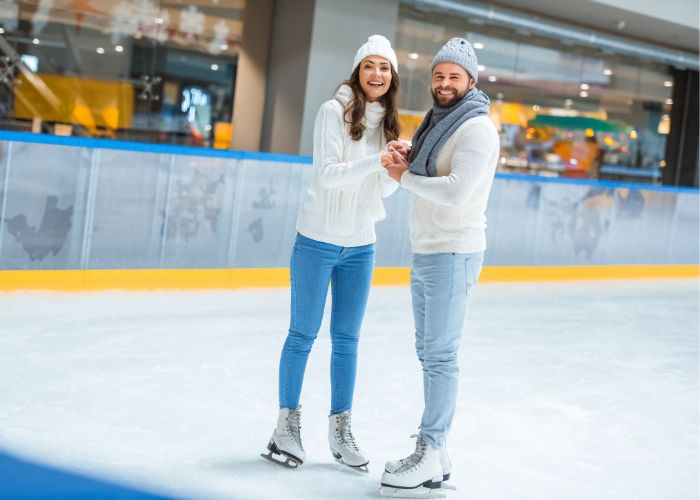
Saturday night at a crowded rink. The speakers are stuck on a pop song from 2009, the Zamboni just left a glossy sheet behind, and one person is gliding backward while the other clings to the boards like a cat on a curtain. Plenty of couples know this scene by heart. One partner grew up on frozen ponds. The other has never worn a skate in their life. That gap doesn't have to ruin an ice skating date.
Handled well, it can make the whole evening funnier, sweeter and a lot more memorable than dinner and a movie.
Why Wobbly Beats Perfect
Skill gaps feel awkward at first. Then they turn into the best part.
Back in 2000, psychologist Arthur Aron and colleagues published a set of studies on couples and shared activities. In one experiment, partners were strapped together with Velcro and had to crawl through an obstacle course while keeping a pillow pinned between them.
Couples who did that clumsy, unfamiliar task reported better relationship quality afterwards than couples given a dull, routine one. A beginner shuffling across the ice while gripping someone's hand is basically the same experiment, just with colder fingers.
So an ice skating date where one person can't skate becomes an opportunity to enjoy something new together. A little novelty, some nervous energy, and a real reason to hold on tight.
Couples who have slipped into the same Friday takeout routine for months, the kind of rut described in these relationship boredom signs, often need exactly that kind of shakeup.
💡 Related - 15 Best Active Date Ideas for Couples Who Love Adventure
Pick the Right Rink and the Right Time
Not every rink is beginner-friendly. Big outdoor rinks in a downtown plaza look gorgeous in photos, but on a December Saturday they turn into bumper cars with blades. Teenagers race in loops. Little kids zigzag at knee height. A nervous first-timer will spend the whole session flinching.
Check the rink's website for public skate times and aim for a weekday evening or an early weekend morning. Many indoor arenas have quieter slots after 8 p.m. Fewer people means more room to wobble, and the ice is often freshly resurfaced, which makes it smoother and more forgiving.
Ask about skate aids, too. Lots of rinks rent plastic walkers, the ones shaped like a little frame that a skater pushes ahead.
Adults use them more often than people think. Nobody cares. An ice skating date goes better when the beginner has something to lean on besides a partner's forearm.
Gear That Saves the Night
Rental skates are a gamble. Ask for the usual shoe size first, then lace them snug through the ankle so the heel doesn't lift. Loose skates are a top reason beginners roll an ankle and quit after ten minutes. Glance at the blades before stepping out, because dull edges slide sideways.
Dress in layers, not a bulky parka. Thin gloves matter more than most people expect, since hands usually hit the ice first. Thick socks? Skip them. One pair of medium socks keeps the fit tight. A beanie works fine, though a bike or ski helmet is a smart call for anyone truly nervous.
The skater in the couple can quietly handle this part. Carry a spare pair of gloves, a small pack of tissues for runny noses, and a couple of bandages for heel blisters.
Nothing kills an ice skating date faster than a raw heel by minute fifteen. Small stuff. Big difference.
How the Skater Should Teach Without Showing Off
A word for the confident partner. Spinning circles around a beginner is not charming. Neither is a long lecture about edges and weight transfer.
Start at the boards. Let the new skater hold the wall with one hand and a partner's hand with the other. Teach one thing at a time. Knees bent, like sitting on an invisible stool. Arms out a little, palms down. Tiny marching steps before any gliding.
Then skate backward in front of them, holding both hands, moving at their speed. Not yours. Praise specific things, like a nice bend in the knees or a three-second glide, because vague cheering starts to sound fake after the fifth round of it.
Patient teaching turns an ice skating date into a small act of trust. The beginner is literally putting their balance in someone else's hands, which builds the same kind of closeness that relationship-building exercises aim for at home.
Falling Is Part of the Deal
Everyone falls. Even Olympic skaters fall, sometimes on live television.
The trick is falling well.
A 2010 study of a temporary rink in Cambridge, England tracked 84 patients injured over roughly eight weeks. Fractures made up 58% of those injuries, and 71% of the fractures were at the wrist, mostly from people throwing out a hand to catch themselves.
The doctors behind the study recommended teaching skaters how to fall and using wrist protectors.
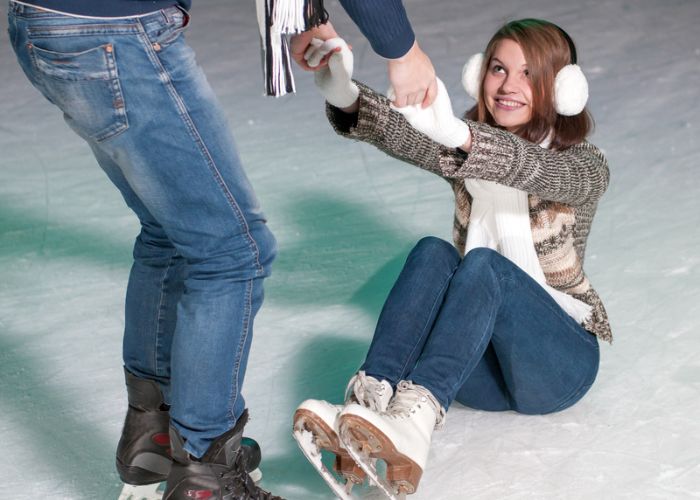
So practice a fall on purpose before the first lap. Bend the knees, lean a little to one side, and drop onto the hip and thigh instead of reaching back with straight arms. Tuck the chin. Getting up is its own lesson.
Roll onto hands and knees, bring one foot flat between the hands, then the other, and stand slowly.
Laugh about the first tumble together. A beginner who watches a partner take a goofy practice fall right beside them relaxes almost instantly.
Cheap wrist guards from a sporting goods store also make an ice skating date feel far less scary for someone who has never stood on blades.
💁♀ Also read - Adventure Holiday Ideas for Couples That Bring Back Excitement
Ice Skating Date Ideas When One Partner Won't Get on the Ice
Some people simply don't want to skate. Bad knees, an old injury, or plain fear. Pushing them is a fast way to sour the night.
Plenty of rinks have a warm viewing area or a snack window, so the nonskater can still be part of the fun. Bring a thermos and film the skater's best and worst moves.
Score each lap like an Olympic judge, holding up napkins with numbers scribbled on them in ketchup. Or pick a rink with a light show or a DJ night, where watching is half the entertainment.
Outdoor rinks open up even more options. Walk the market stalls nearby, share a soft pretzel, then meet at the rail while the skater does a few slow laps and waves every time around. An ice skating date still works when only one person laces up.
Couples who liked the playful spirit of these golf date ideas for couples will recognize the same idea here. One person can be better at the activity, and both can still have a blast.
The partner on the sidelines picks the next outing. Fair is fair.
Keep the Mood Light When Frustration Hits
Around minute twenty, the beginner usually hits a wall. Legs burn. Toes ache. Somebody's seven-year-old niece just zipped past backward. Pride takes a beating.
Watch for the signs. Short answers, a tight jaw, eyes fixed on the exit. That's the moment to take a break, not push one more lap. Sit on the bench, loosen the laces for five minutes, and talk about anything else.
Skating is harder work than people assume.
Harvard Health estimates that 30 minutes of general ice skating burns about 252 calories for a 155-pound person, nearly double the 133 burned walking at 3.5 miles per hour. A beginner also tenses every muscle on top of that, so tired legs come fast.
Small rewards help. One more lap, then nachos. A full trip around the rink without touching the wall earns a song request at the DJ booth.
Partners who keep learning how to spend quality time with each other know the goal is to enjoy a good ice skating date, not to make it perfect.
Warm Up Once You're Off the Ice
The night shouldn't end at the skate return counter. Cold cheeks and sore calves call for something warm.
Grab hot chocolate with too many marshmallows, or split a bowl of ramen at the closest noodle place. Swap stories about the best fall of the night. The beginner usually has the funniest one.
Back home, a hot shower and a heating pad on the couch feel like a prize. Some couples put on music and sway in socks across the kitchen floor, which is basically skating without the bruises.
These romantic dance ideas for couples fit nicely after a long night on blades. And as the holidays get closer, add a second trip to the rink to a list of December date ideas so the beginner can see how much easier round two feels.
Notice what the other person did well and say it out loud. That habit is one of the quiet green flag signs of a relationship worth keeping.
Recommended read - Fun Couple Rafting Games to Try on the Water
From Wobbly Steps to a Story Worth Retelling
Two people with very different skill levels can absolutely share the ice. Pick a quiet session, lace the skates tight, practice falling, and let the stronger skater slow way down. Celebrate the small wins, take breaks before anyone snaps, and finish somewhere warm. An ice skating date where one partner can't skate might start with wobbling and a death grip on the wall.
By the end, though, most couples leave with sore legs, red noses and a story they'll keep retelling for years. ⛸️