
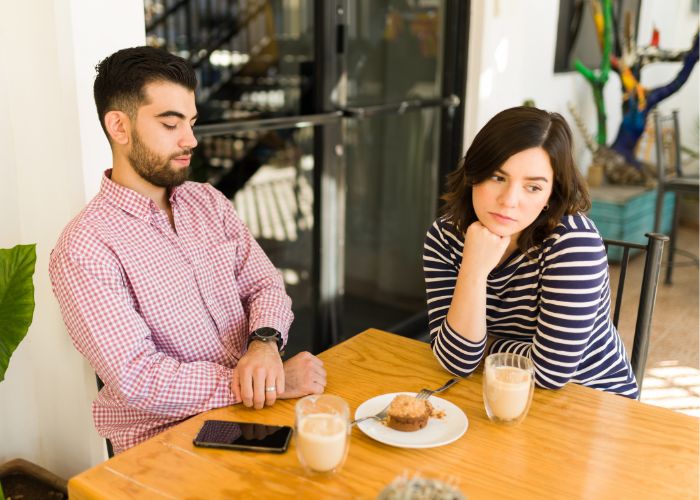



Love can make ordinary life feel larger and more meaningful. Yet the same devotion can slowly become heavy when fear enters the relationship. Many people do not notice the change until their own needs start disappearing. If you are asking “Is loving someone too much bad?”, the answer depends on what your love is asking you to sacrifice.
Deep affection is not a problem by itself. Trouble begins when your happiness depends entirely on another person, or keeping them close becomes more important than remaining emotionally healthy.
Can Loving Someone Deeply Become Unhealthy?
Deep affection becomes unhealthy when closeness starts being driven by fear, dependence, or constant reassurance. Loving someone deeply can bring comfort, loyalty, and a strong sense of belonging. Those feelings are natural in a serious relationship.
The problem begins when affection slowly becomes fear. A delayed message suddenly feels important. A quiet evening feels like rejection. One disagreement leaves you wondering if everything between you is changing.
A systematic review of 112 studies on romantic relationships and well-being found that romantic relationships can be an important source of well-being during adolescence and emerging adulthood, while relationship quality and other factors influence those outcomes.
Healthy love can feel powerful without making you afraid of every small change.

💡 Related - What is Healthy Jealousy in a Modern Loving Relationship
When Does Love Become Overgiving?
Giving becomes a concern when care is no longer freely chosen and starts feeling necessary for keeping the relationship. Helping your partner is one of the simplest expressions of affection. You may support them during difficult days, remember what matters to them, and occasionally put their needs first.
Yet sacrifice should not become your permanent role. For example, you may cancel plans whenever your partner wants you nearby. At times, you may agree even when something feels wrong. Eventually, you may start solving problems they could reasonably handle themselves.
Recognizing overgiving in a relationship can help separate generosity from emotional exhaustion.
Healthy giving comes from care. Unhealthy giving often comes from the fear that saying no may change how someone feels about you.
Why Can Anxiety Feel Like Love?
Strong attachment and relationship anxiety can feel similar because both keep another person close to your thoughts. When someone matters deeply, the possibility of losing them naturally feels uncomfortable. For some people, that uncertainty becomes difficult to tolerate.
You may check your phone repeatedly. A late reply can lead to several imagined explanations. Time apart may leave you searching for reassurance.
The feeling is intense, so it may appear to be proof of stronger love. Sometimes anxiety is creating that intensity.
Understanding dating anxiety can make it easier to notice when reassurance has become a repeated emotional need.
Love needs trust alongside closeness. Without trust, attention can slowly become vigilance.
What Signs Show You Are Losing Yourself?
The clearest warning signs often appear in the ordinary choices you no longer feel free to make. Unhealthy attachment rarely begins with one dramatic moment. It develops through small decisions that gradually become normal.
You may stop seeing friends because your partner wants more time together. Hobbies disappear from your week. Your mood begins depending on how warmly your partner treats you.
You may also notice that you -
1) Feel guilty when spending time away from your partner.
2) Avoid disagreements because you fear losing the relatinship.
3) Need repeated reassurance that you are loved.
4) Ignore behavior that regularly hurts you.
5) Change your opinions to prevent conflict.
6) Feel responsible for your partner's happiness.
7) A single sign does not define a relationship.
The larger pattern matters. Love deserves attention when preserving it repeatedly requires abandoning important parts of yourself.
💁♀Also read - How to Control Your Jealousy in a Relationship with Maturity
Can You Love Someone Without Losing Your Identity?
Healthy closeness leaves room for both people to remain recognizable as individuals. Your friendships, interests, ambitions, and private thoughts still matter after you fall in love.
Time apart does not automatically weaken intimacy. Learning how to maintain individuality in a relationship becomes particularly useful when one relationship begins filling nearly every part of your emotional life.
Two people often have more to bring back to each other when they continue experiencing life as individuals. A separate afternoon can bring a new story, idea, or simple desire to reconnect.
A relationship becomes unnecessarily heavy when it must provide identity, friendship, entertainment, reassurance, purpose, and constant validation at once.
Why Do Healthy Relationships Need Boundaries?
Boundaries help two people remain close without turning affection into unlimited access. A boundary may mean asking for quiet after an argument. It may mean seeing friends independently or keeping certain personal conversations private.
Phones can make these limits particularly complicated.
A Pew Research Center survey of 4,860 U.S. adults found that 40% of partnered adults were often or sometimes bothered by the amount of time their partner spent on a cellphone. The same research found that 51% said their partner was at least sometimes distracted by a phone while they were trying to talk.
Clear social media boundaries can help prevent ordinary concern from becoming monitoring.
A boundary does not reduce affection. It shows where respect must remain present.
What Does Emotional Safety Feel Like?
Emotional safety means being able to express yourself without constantly preparing for a negative reaction. You should be able to disagree without expecting punishment. You should be able to admit that something hurt without wondering if honesty will create another problem.
“I used to rehearse every sentence before speaking,” Eleanor said. “I thought I was keeping the peace, but I realized I no longer felt emotionally safe.”
That realization can arrive quietly. Someone may believe they are simply being considerate. Yet constantly changing yourself to manage another person's reaction is different from kindness.
Building respect in a relationship means creating enough emotional room for both people to speak honestly.
Can Too Much Attention Hurt A Relationship?
Attention strengthens connection when it is given freely, but constant availability can create pressure. Messages can help couples feel close during an ordinary day. Problems begin when every message requires an immediate answer.
Work may start feeling like neglect. Friends may feel like competition. Time alone may begin looking like rejection.
Affection is then measured through availability. Thoughtful romantic gestures can communicate care without demanding permanent access to another person's attention.
A warm message can brighten someone's afternoon.
Repeated messages demanding to know why the first one was unanswered communicate something very different.
Why Does Compatibility Matter Alongside Love?
Powerful feelings can bring people together, but shared values often determine how comfortably they can build a life. Two people can feel intense chemistry while disagreeing about money, commitment, family, lifestyle, or future plans.
Love may help couples understand their differences. It cannot automatically remove every incompatibility.
Someone can be sincerely loved and still be wrong for the life you want. Strong feelings deserve respect, but so do practical realities.
A lasting relationship needs affection alongside trust, values, communication, and mutual direction.
How Can You Bring Balance Back Into Love?
Balance returns when affection leaves room for your needs, routines, relationships, and personal voice.
You do not need to become distant. Start by returning small parts of your life to yourself. Meet the friend you keep postponing. Return to an interest you once enjoyed. Let your partner handle responsibilities that belong to them.
Then speak clearly about what you need. Developing emotional intelligence in dating can help you notice your emotions without immediately turning discomfort into fear or blame.
Love does not need to become smaller. It needs enough room for both people to live comfortably inside it.
When Does Concern Become Control?
Concern respects another person's freedom, while control uses fear or affection to restrict it.
Concern asks if you reached home safely. In contrast, control demands proof of where you were. Similarly, concern notices that you seem upset. On the other hand, control decides who you may meet, where you may go, or how much privacy you deserve.
Jealousy is not automatically evidence of deeper affection. Monitoring is not the same as protection.
If you regularly change ordinary behavior because you fear your partner's reaction, that feeling deserves serious attention. Love can include fear of loss. It should not turn that fear into permission to control another person's life.
Recommended read - How to Attract a Soul Mate Without Emotional Burnout
What Should Healthy Love Feel Like In The End?
Healthy love feels close enough to offer comfort and spacious enough to let both people remain themselves. The question “Is loving someone too much bad?” becomes clearer when you look at what the relationship creates in your everyday life. You should be able to speak honestly, maintain friendships, spend some time apart, and disagree without constantly fearing abandonment.
Deep love can be intense without becoming controlling. It can involve sacrifice without losing yourself. It can bring two people close while still respecting each life.
You should still recognize yourself in that closeness. Keep your own thoughts, hopes, friendships, and quiet moments. 🌿